

Insights y recursos sobre marca privada
FDA Regulations for Private Label Hygiene Products: Tampons, Wipes, and What Buyers Need to Know
Most distributors think the hard part is finding a reliable source. It's not. The real grind starts when the FDA enters the picture, and if you're importing tampons or wipes without understanding what that means, you're one audit away from a mess. These aren't novelty items. They're medical devices or cosmetics that touch skin, mucous membranes, and everything in between. The FDA doesn't care how efficient your logistics are. They care whether your product is safe, labeled correctly, and made under rules that actually protect people.
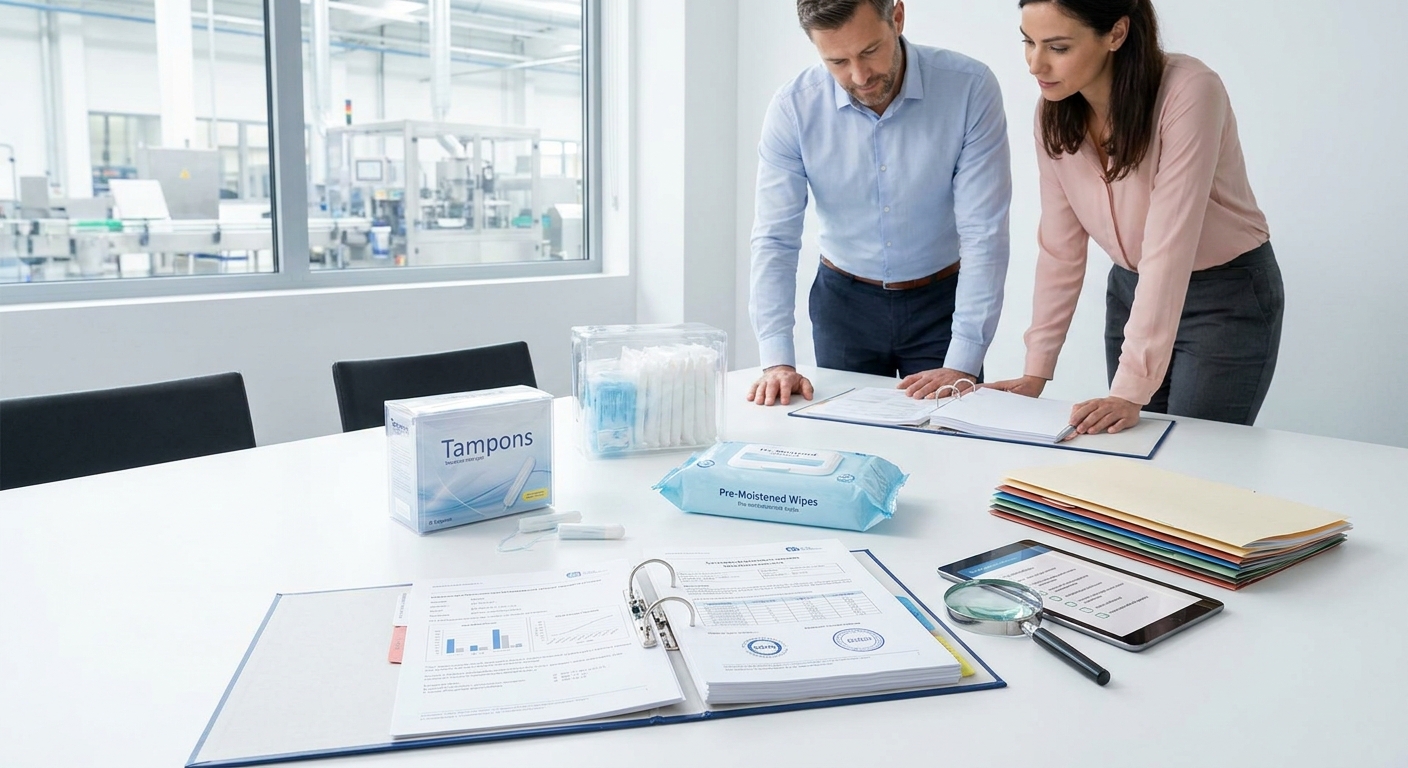
So here's the reality. If you're building a distribution program with real staying power, compliance isn't optional. It's the foundation. Every ingredient needs documentation. Every claim needs backup. And every regulatory decision should reflect how the product will be used, not just how it's marketed to your retail accounts.
Tampons Are Medical Devices Whether You Like It or Not
The FDA classifies tampons as Class II medical devices. That puts them in the same risk category as powered wheelchairs and pregnancy test kits. Why? Because they carry risk, specifically Toxic Shock Syndrome, material sensitivities, and misuse potential. This classification triggers a cascade of requirements that source factories and private label importers can't sidestep.
If you're planning to bring a tampon product into your distribution network, you're not just ordering containers and putting labels on cases. You're navigating premarket notifications, labeling mandates, and ongoing quality system compliance. Miss one step and your product doesn't just get delayed. It gets flagged at the port.
What the 510(k) Process Actually Demands
Before your tampon shipment clears customs, the source factory must have filed a 510(k) premarket notification with the FDA. This document proves the product is substantially equivalent to something already on the market. It's not a rubber stamp. The FDA reviews materials, absorbency data, design specs, and safety testing. If the product uses a new fiber blend or applicator design, expect more scrutiny.
Most importers assume the factory handles this. They do, but you need to verify it happened. Ask your sourcing partner for the 510(k) clearance letter. Confirm the product you're importing matches what was cleared. If the factory tweaks the formula or sourcing after clearance, that's a new regulatory question. And you're the one whose distribution license is on the line.
Labeling Rules You Can't Ignore
Tampon packaging isn't creative freedom territory. The FDA mandates specific disclosures, and they're non-negotiable. Every retail package must include absorbency ratings, usage instructions, and a clear warning about Toxic Shock Syndrome. The language isn't up for interpretation. The FDA provides exact templates.
We've seen distributors try to "improve" the messaging or modify warnings for regional markets. That's not compliance. That's asking for a warning letter. Your label is a legal document as much as a marketing tool. Treat it that way.
- Absorbency must be stated in standardized terms defined by the FDA
- TSS warnings must appear prominently and include symptoms
- Instructions for insertion, wear time, and removal are required
- Ingredient transparency isn't federally mandated but is increasingly expected by retail buyers
- Any structural changes to the tampon or applicator may require label updates
Manufacturing Standards That Actually Matter
Good Manufacturing Practices aren't suggestions. For tampons, the FDA's Quality System Regulation lays out how facilities must operate, from design controls to production processes to final inspection. If your source factory isn't following these, your product isn't compliant. Period.
Ask for evidence through your sourcing partner. Request copies of the most recent FDA inspection report. Confirm that corrective actions were closed. If the facility has never been inspected, that's a red flag. Not necessarily a dealbreaker, but it means you're taking on more risk. And if something goes wrong, the FDA will trace it back to the importer of record. Your name on the customs documents makes you part of that chain.
Wipes Live in Regulatory Gray Zones
Wipes are trickier. Depending on what they do, or what you say they do, they might be cosmetics, medical devices, or over-the-counter drugs. Baby wipes? Cosmetics. Makeup remover wipes? Cosmetics. Antibacterial hand wipes? OTC drugs. Disinfecting surface wipes? Potentially pesticides under EPA jurisdiction. The line between categories is thinner than most importers realize.
This is where claims get distribution businesses in trouble. Call your wipe "antimicrobial" and you've just triggered drug regulations. Say it "kills 99.9% of germs" and the EPA might want documentation. The words you choose aren't marketing fluff. They're regulatory triggers. Get them wrong and you're importing an unapproved product.
- Cosmetic wipes need ingredient disclosure and safe formulation but no premarket approval
- Drug wipes require compliance with OTC monographs or New Drug Applications
- Medical device wipes must meet device regulations and potentially 510(k) clearance
- Color additives in cosmetic wipes must be FDA-approved for the intended use
- Preservatives need safety data, especially for leave-on or intimate-use products
Ingredient Safety Isn't Negotiable
Every ingredient in your wipes must be safe for its intended use. For cosmetics, that means no prohibited substances, and any color additives must appear on the FDA's approved list. For drug wipes, you're working within the confines of monograph ingredients or filing for approval on anything outside that scope.
Importers often assume the factory has this covered. Sometimes they do. But we've seen cases where suppliers substituted ingredients to cut costs, or where preservative systems weren't validated for the product's intended shelf life. If the formulation shifts and you're not tracking it through your sourcing partner, you're flying blind. Request Certificates of Analysis for every container. Review the ingredient deck. If you don't know what's in the product, neither does your retail customer, and that's a liability waiting to happen.
When Labeling Becomes a Legal Minefield
Wipe labels must reflect what the product does without crossing into unapproved claims. If it's a cosmetic wipe, you can say it "cleanses" or "refreshes." You can't say it "treats" or "prevents" anything. That turns it into a drug. And if you're making drug claims, you'd better have the data and approvals to back them up.
We've seen distribution programs try to walk the line with language like "supports healthy skin" or "helps protect." The FDA isn't impressed by creative wordsmithing. They look at the overall impression your label creates. If a reasonable consumer would interpret your product as treating a condition, it's a drug. Even if you never used the word "cure."
- All ingredients must be listed by their proper names, not marketing names
- Net quantity of contents must be displayed clearly
- Importer or distributor information is required
- Warning statements are mandatory if the product poses any risk
- False or misleading claims can trigger enforcement action and costly recalls
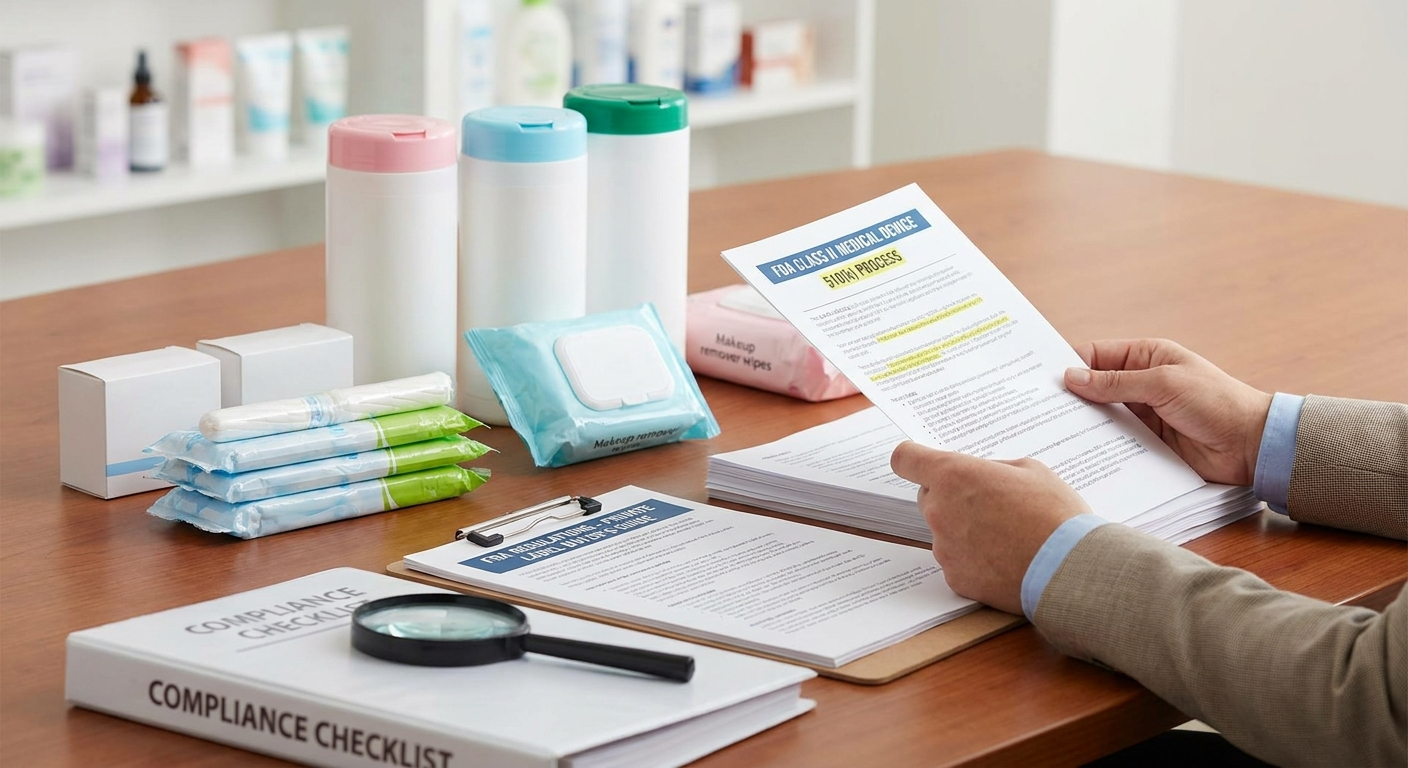
Why GMP Compliance Protects Your Distribution Network
Whether your wipes are cosmetics or devices, Good Manufacturing Practices apply. Facilities must control contamination, validate processes, and maintain traceability from raw materials to finished goods. This isn't bureaucratic theater. It's how you avoid contamination events, batch failures, and product recalls that shut down distribution channels.
Ask your sourcing partner about the factory's quality management system. Request audit reports from third parties, not just internal checklists. If they're ISO-certified or registered with the FDA, that's a good sign. If they're vague about their processes or reluctant to share documentation, walk away. No factory is perfect, but transparency through your sourcing partner is the baseline.
Common Mistakes That Sink Distribution Programs
Most failures don't come from bad intentions. They come from assumptions. Assuming the factory handled compliance. Assuming the label is fine because it looks like a competitor's. Assuming the FDA won't notice a regional distributor. Those assumptions cost money and reputation.
Track every claim you make to retail accounts. Keep records of every container. Know where your ingredients come from and whether they're approved for your product type. If you're making changes, new packaging configuration, new sourcing region, new factory partner, evaluate whether those changes affect your regulatory status. Small tweaks can have big consequences.
- Using unapproved color additives because they "look better"
- Skipping microbial testing to save on costs
- Copying competitor labels without understanding the claims
- Failing to update labels when formulations change
- Ignoring adverse event reports from retail customers
Building a Compliance Strategy That Scales
Compliance isn't a one-time checkbox. It's an ongoing system. As your distribution network grows, so does your regulatory footprint. More product lines mean more formulations to track. More volume means more containers to test. More retail accounts mean more label variations and more states with their own rules on top of federal requirements.
Set up internal processes now. Designate someone to own regulatory compliance, even if it's you. Build relationships with testing labs, regulatory consultants, and legal advisors who understand FDA enforcement for importers. Don't wait until you receive a warning letter to figure out where your gaps are. Audit your own operation before the FDA does.
Speed Without Shortcuts
Importing feminine care and pre-moistened wet wipes offers speed to market, but only if you're working with sourcing partners who respect the rules. The right sourcing partner doesn't just arrange production. They verify documentation, coordinate testing, and stay current on regulatory shifts across multiple markets. The right importer doesn't just order containers. They verify, question, and demand transparency. Together, that's how you build a distribution program that lasts and a product line the FDA won't dismantle. With over 40 years of experience and established networks in more than 30 countries, a proven sourcing partner brings the global reach and regulatory knowledge that protects your import license. Compliance and growth aren't opposites. They're partners when you know what you're doing.
Let's Build Your Distribution Program the Right Way
Regulatory compliance is the backbone of any successful hygiene product distribution program, and it's not something we leave to chance. When we work together, we make sure every detail is covered so your distribution network stands strong for all the right reasons. If you're ready to move forward with confidence, call us at 305-653-8141 or contact Tradis today and let's take the next step together.
‹ Atrás