Private Label Insights & Resources
Industry insights on private label hygiene products, sourcing strategies, and market trends.


Private Label Insights & Resources
Industry insights on private label hygiene products, sourcing strategies, and market trends.
The adult incontinence market doesn't sleep. Demand climbs year after year, fueled by aging populations and a slow but steady cultural shift away from embarrassment. If you're sourcing private label products in this space, you're looking at real opportunity, but only if you understand the mechanics. MOQs aren't suggestions. Pricing isn't static. And product categories carry compliance weight that can sink your distribution program if you're not paying attention.

Most distribution businesses stumble before they even get samples. They chase low prices without understanding volume commitments. They pick suppliers based on a single quote. And they ignore the fine print on certifications until it's too late. We've seen it happen. The good news? It's avoidable if you know what levers to pull.
Adult incontinence products cover a lot of ground. Briefs, pull-ups, pads, underpads, bed protectors. Each serves a different user and a different need. Some institutional buyers prioritize maximum absorbency. Others need products optimized for discretion or comfort. Gender matters. Care setting matters. Your product mix can't be one-size-fits-all if you want traction with retailers, healthcare facilities, or regional distributors.
Before you reach out to a sourcing partner, map your target market. What facilities are you serving? What problems are their end users trying to solve? The clearer your answer, the easier it is to source incontinence care products that actually move through your distribution channels. And the less likely you are to get stuck with container loads that don't fit your customers' needs.
MOQ is where most new distribution partners hit a wall. Container-level purchasing requires commitment to volume. Standard products with minimal customization offer more flexibility. Start requesting custom sizes, unique packaging configurations, or proprietary absorbency specifications? Expect those requirements to shift significantly.
Here's what drives MOQ structures up or down:
If you're building distribution capacity, negotiate strategically. Some sourcing partners can structure container loads across complementary product lines or offer established SKUs that require less upfront customization commitment. But understand the economics. Global sourcing operates on efficiency, and partial container orders rarely make financial sense without trade-offs.
Landed cost per unit isn't just about the product. It's about everything that touches it: materials, labor, packaging, freight, duties, and compliance. Standard adult diapers carry a base production cost, but that's before you add custom branding, premium materials, or advanced absorbency layers. Those upgrades push costs higher, and if you're not tracking total landed costs, you're setting yourself up for margin erosion at the distribution level.
Volume is your best pricing lever. Container-level purchasing provides the foundation for competitive unit economics. But only if you can move the inventory through your distribution network. Warehousing excess product that doesn't turn is worse than maintaining slightly higher per-unit costs on products that move consistently.
Other cost drivers to watch:
Request complete landed cost breakdowns from every sourcing partner. If they won't show you where the costs come from, walk. Transparency matters, especially when you're building distribution programs that depend on predictable margins across multiple sales channels.
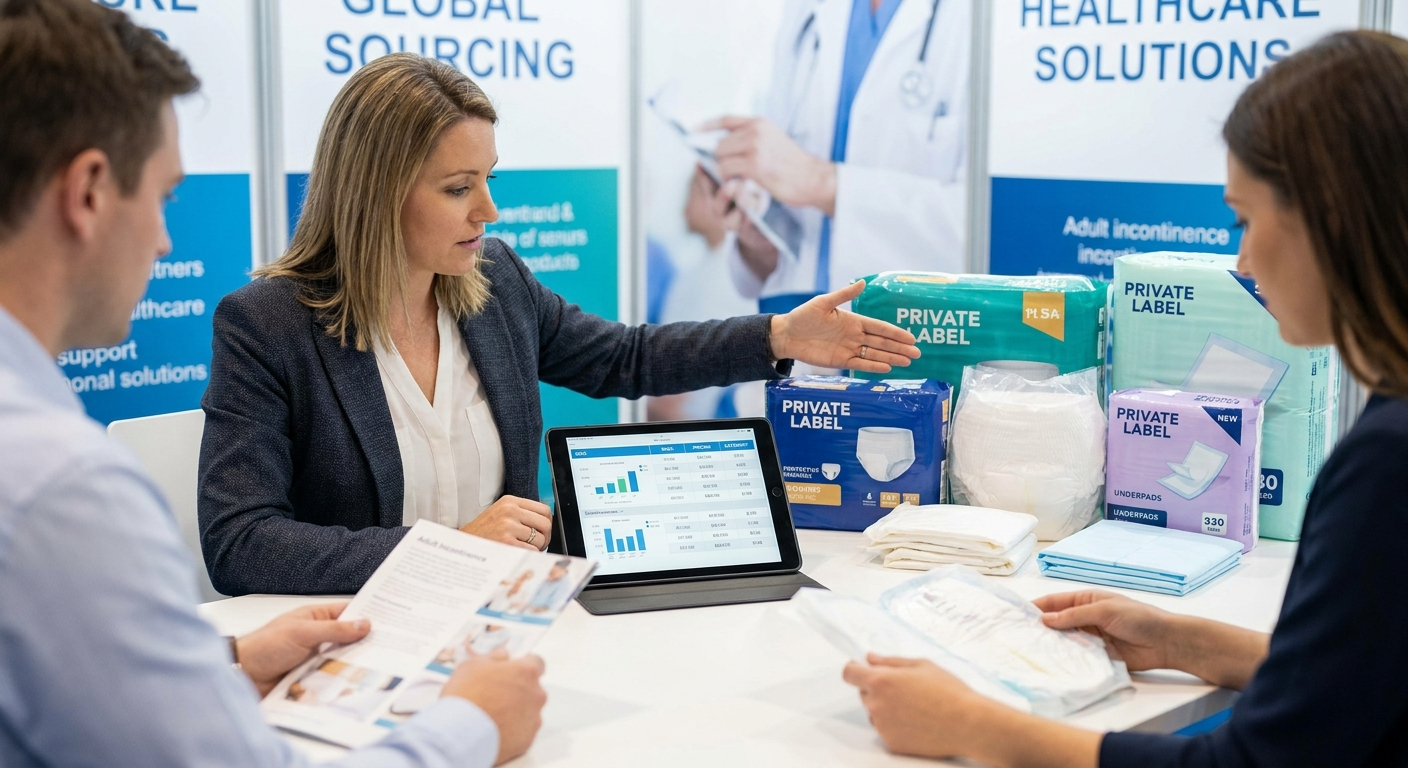
You can't serve every market segment, but you do need strategic range. A single product category rarely builds a distribution business in this space. Institutional buyers, retailers, and healthcare facilities want options: different absorbency levels, different fits, different use cases. If you only stock heavy-duty institutional briefs, you're leaving revenue on the table from facilities that need moderate or light protection products.
Think through your product portfolio strategically:
And then there's compliance. Adult incontinence products fall under medical device regulations in many markets. That means documentation, testing, and certifications. Work with sourcing partners who understand the regulatory landscape across your target regions. A partner with over 40 years of experience and distribution networks in more than 30 countries brings regulatory knowledge that protects your market access. If they can't provide CE marks, FDA registrations, or ISO certifications on request, move on.
Low quotes look attractive until the container arrives. We've seen distribution businesses get burned by suppliers who skimped on materials, provided inadequate certifications, or delivered products that didn't match approved samples. Due diligence isn't optional. Request pre-production samples. Verify factory credentials through your sourcing partner. Check references from other distributors they've served.
Ask pointed questions:
If they hesitate or dodge, that's a red flag. Reputable sourcing partners with decades of experience expect these questions and answer them clearly with documentation. The ones who don't are the ones who disappear when problems surface after the container clears customs.
Private labeling adult incontinence products for distribution isn't a get-rich-quick play. It's a business that rewards attention to detail, sourcing partner relationships, and a clear understanding of your target markets. MOQs, pricing structures, and category considerations aren't obstacles. They're levers. Pull the right ones with an experienced partner, and you build a distribution business that earns trust and moves product. Ignore them, and you end up with container loads that don't fit your customers' needs or your margin requirements.
The distribution businesses that win in this space don't chase the lowest FOB price. They chase the best total value: sourcing partners who deliver on quality, meet compliance standards across multiple markets, and scale with their growth. Working with experienced importers who source incontinence wipes washcloths, quality bladder control pads, and reliable underpads across global manufacturing networks makes the difference between sourcing products and building a distribution program that delivers consistent value.
We know that sourcing the right adult incontinence products can make or break your distribution business. With over 40 years of experience and established networks in more than 30 countries, we're positioned to help you find solutions that fit your market strategy, your customers' needs, and your margin requirements. If you're ready to move forward or want to discuss container-level sourcing options, give us a call at 305-653-8141 or contact Tradis today. We're here to help you build a distribution program that lasts.



August 14, 2026

July 31, 2026
Share your product requirements, and our team will follow up.
CONTACT US
Site by