Private Label Insights & Resources
Industry insights on private label hygiene products, sourcing strategies, and market trends.


Private Label Insights & Resources
Industry insights on private label hygiene products, sourcing strategies, and market trends.
Most procurement teams treat manufacturing partnerships like a checkbox. Pick a vendor, sign a contract, hope for the best. But the model you choose — white label, private label, or custom — dictates everything from your margins to your competitive position in the channel. Get it wrong at launch, and you're stuck competing on price with a product any distributor can source. Get it right, and you've built something defensible that strengthens your retail relationships.
The path you take depends on where your organization is. If you're testing demand in a new product category with limited capital deployment, your needs look nothing like a distributor scaling into national retail accounts. And if you're committing resources to custom development before you've validated buyer commitments, you're asking for trouble. Every manufacturing decision should be grounded in your stage — not just what sounds impressive in a procurement presentation.
White label is the off-the-rack option. You're buying a finished product that dozens of other distributors and retailers could also apply their branding to. The manufacturer owns the formula, the design, the supply chain — you just own the branding. It's fast, it's economical, and it's completely undifferentiated.
Private label gives you a step up. You're still working with an established supply partner, but you get to customize the product. Maybe you adjust the absorbency levels, modify the formulation, or redesign the packaging to match your retail partners' requirements. It's not built from scratch, but it's not identical to what every other distributor is selling either. You gain control without the full weight of custom development.
Custom manufacturing is the deep end. You're building from the ground up — formulation, design, tooling, everything. It's your product, your specs, your risk. And it requires the capital, the timeline, and the buyer commitments to see it through.
If you're entering a new product category or testing retail demand in an unfamiliar segment, white label is the fastest way to get market feedback without substantial capital exposure. You're not trying to build a moat yet — you're trying to figure out if your retail accounts actually want what you're offering. Speed and capital efficiency matter more than differentiation at this stage.
Here's where white label works best:
But there's a trade-off. You're selling the same thing as competing distributors, which means you're competing on price and relationships alone. If the product gains traction with retailers, competitors can source the same thing. And if quality control slips at the manufacturer, you're stuck with whatever they ship — and your retail relationships take the hit.
Once you've validated demand and have established buyer commitments, private label becomes the smarter play. You're still leveraging your supply partner's infrastructure, but you're adding enough differentiation to stand out. Maybe it's a modification to the diaper absorbency, a proprietary formulation for your wet wipes, or packaging that actually reflects your retail partners' brand positioning. It's not groundbreaking, but it's yours.
This model works when you're ready to invest more but still need to move efficiently. You're building brand equity for your accounts without the full weight of custom development. And because established supply partners already have the production infrastructure in place, your costs and timelines stay reasonable.
Here's what private label delivers:
The downside? You're still working within your supply partner's framework. If they can't source a specific material or adjust the specifications the way your retail accounts want, you're limited. And if another distributor goes to the same factory with a similar request, your differentiation shrinks.
Custom manufacturing is for distributors and importers that know exactly what their retail accounts need and have the resources to make it happen. You're not guessing anymore — you've proven demand, you understand your buyers, and you're ready to build something no competing distributor can replicate. This is where true product differentiation lives, but it comes at a cost.
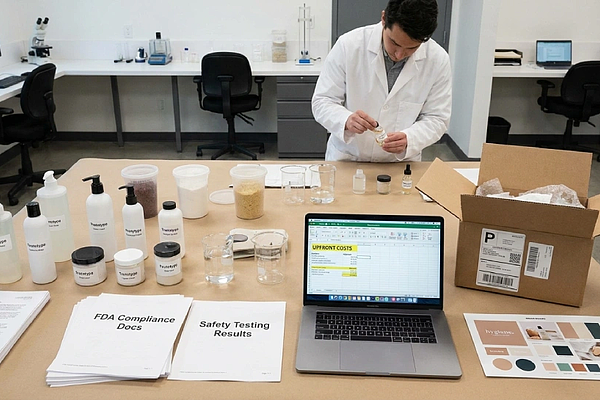
You'll need substantial capital reserves and patience. Custom tooling, formulation development, and production setup take time and investment. Volume requirements are higher, timelines stretch into months, and if the market shifts before you launch, you're holding expensive inventory with nowhere to go.
Here's what custom manufacturing unlocks:
But the risks are real. High upfront costs mean you need confidence in your buyer commitments. Long development cycles mean you're betting on what the market will demand months from now. And if the product misses the mark, you've committed capital into something that won't move.
Your stage dictates your strategy. Organizations testing product-market fit in new categories should lean into white label. You're optimizing for speed and learning, not building a fortress. Once you've got buyer traction and consistent container-load orders, private label lets you differentiate without the risk of custom. And when you're scaling aggressively with proven institutional demand, custom manufacturing becomes the move that separates you from every other distributor.
Here's how to think about fit:
Your manufacturing model isn't permanent. Most institutional buyers start with white label, shift to private label as they grow, and eventually move to custom when the economics make sense. The mistake is locking yourself into the wrong model too early — or staying in one too long because it feels safe.
If you're still validating demand with retail accounts, custom manufacturing is overkill. If you're processing container-load orders monthly and still running generic white label products, you're leaving margin and competitive positioning on the table. The right move is the one that fits where you are now — and sets you up for where you're going next.
With over 40 years of experience and sourcing relationships across more than 30 countries, Tradis understands what institutional buyers need. We work with importers, distributors, and retailers who buy by the container and need a supply partner that can deliver consistent quality, competitive pricing, and the flexibility to customize products across wipes, diapers, and pads. Our global sourcing network means you get access to manufacturing capabilities that would take years to build on your own.
Choosing the right manufacturing model is about more than just cost — it's about setting your distribution business up for real growth. If you're ready to take the next step, let's talk through your options and find the best fit for your stage. Call us at 305-653-8141 or contact Tradis today to get started on your path to a stronger, more differentiated product line.

August 14, 2026

July 31, 2026
Share your product requirements, and our team will follow up.
CONTACT US
Site by