Private Label Insights & Resources
Industry insights on private label hygiene products, sourcing strategies, and market trends.


Private Label Insights & Resources
Industry insights on private label hygiene products, sourcing strategies, and market trends.
Most procurement teams assume launching a private label hygiene program is simply a matter of identifying a supplier and applying branding to existing products. It's not. The capital commitment required for institutional-scale programs is substantial, and underestimating it can derail launch timelines before your first container ships. Private label hygiene isn't a low-barrier category — it's a regulated product sector with compliance requirements, volume thresholds, and supply chain investments that accumulate rapidly. We've observed procurement teams caught off guard by costs they didn't anticipate, typically in packaging customization or regulatory compliance phases.
Here's what importers, distributors, and retailers need to understand. Launching a hygiene program requires capital allocation for product development, production runs, design systems, testing protocols, and logistics infrastructure — all before a single container reaches your warehouse. Every investment should be justified against margin requirements. Every vendor proposal should be scrutinized for total cost of ownership. And every decision should align with your working capital position, not just positioning objectives with your retail accounts.
Standard specifications won't differentiate your program in competitive retail environments. Custom product development for diapers, wipes, and pads requires qualified technical teams, stability testing protocols, and multiple development cycles. Stock specifications reduce upfront investment but also limit product differentiation — a significant consideration in saturated categories.
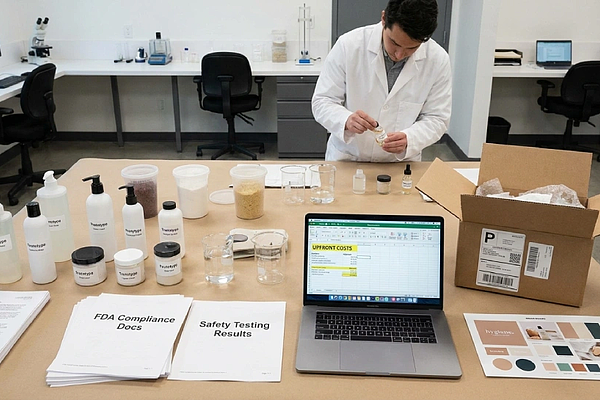
Product development work includes safety validation and shelf-life testing. You'll need documented proof that products maintain stability, performance, and safety profiles throughout their specified shelf life. Bypassing these protocols creates liability exposure and potential recall scenarios that can terminate distribution programs before they gain traction.
Production facilities structure operations around economically viable batch sizes. Minimum order quantities reflect the threshold where production setup costs, machine time, and logistics overhead become profitable. These volume requirements are standard across the industry and structured to support container-load shipments rather than trial quantities.
Production investment scales with order volume, material specifications, and regulatory certifications. Organic certifications, premium material sourcing, or specialized packaging formats increase capital requirements. Larger orders improve unit economics but also increase working capital deployment in unsold inventory sitting in your warehouse.
Product quality means nothing if packaging appears generic or fails to meet your retail accounts' requirements. Professional packaging development requires coordination across design, structural engineering, and supplier qualification. This represents significant investment before physical materials are even sourced.
Once design is finalized, you'll need qualified suppliers for primary packaging components, labeling systems, and secondary packaging materials. Packaging suppliers maintain their own volume thresholds, and custom tooling or printing setups represent additional capital outlays. Sustainable packaging options — such as post-consumer recycled materials or alternative substrates — carry premium pricing. But if your retail partners' positioning depends on sustainability credentials, economizing here undermines your competitive advantage.
Regulatory agencies don't differentiate by company size. Whether you're distributing personal care items, hygiene products, or health and beauty items, you're accountable for safety validation, labeling accuracy, and material disclosure requirements. Third-party testing and safety assessments are required for each SKU, and certification programs for claims like hypoallergenic, dermatologist-tested, or eco-friendly represent additional expense.
International distribution increases compliance complexity exponentially. European Union regulations are more stringent than U.S. requirements, and certain materials permitted domestically are prohibited in overseas markets. Ignoring compliance protocols isn't viable. Single recall events or legal claims can eliminate distribution programs before they achieve scale — and damage your relationships with retail accounts.
Basic product specs and generic packaging are insufficient for institutional retail programs. You need cohesive product positioning, professional product photography, and go-to-market strategies that resonate with your target retail accounts. Product presentation development, whether executed internally or through agency partners, represents substantial investment.
Most new programs also underestimate content development requirements. You'll need product photography, retail presentation assets, and potentially video content for buyer presentations and digital channels. Whether these are developed in-house or outsourced, they represent either direct costs or opportunity costs in staff time.
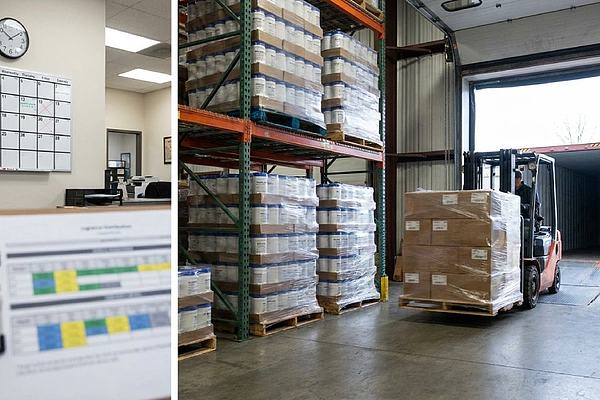
Once production is complete, inventory requires warehousing and distribution infrastructure. Third-party logistics providers or dedicated warehouse space represent ongoing operational expenses that scale with inventory volume. Fulfillment operations carry per-transaction costs for receiving, picking, packing, and shipping that impact margin calculations at scale.
Shipping materials and packaging supplies represent another operational expense category. Cartons, protective materials, and shipping supplies accumulate costs that appear minor until you're processing significant container volumes. If you're absorbing freight costs to remain competitive with established distributors, those expenses reduce gross margin directly.
Beyond primary expense categories, several cost areas catch procurement teams unprepared. Business entity formation, trademark registration, liability insurance coverage, and legal agreements with sourcing partners represent necessary investments. These aren't visible expenses, but they protect your business assets and limit institutional risk.
Then there's the cost of execution errors. Incorrect packaging specifications, supplier performance failures, or launching without validated retail commitments — all create expensive delays and rework. The more thorough your planning and supplier vetting process, the fewer costly surprises you'll encounter during execution.
Successful private label hygiene programs require substantial capital investment for product development, compliant specifications, professional presentation systems, and sufficient inventory to support initial distribution commitments. Consider exploring baby care, feminine care, or health and beauty product categories depending on your target retail segments.
If capital availability is constrained, adjust program scope accordingly. Launch with fewer SKUs initially. Utilize proven stock specifications. Partner with sourcing providers who accommodate variable volume commitments. Whether you're developing pre-moistened wet wipes or incontinence care products, don't compromise on compliance validation, safety testing, or product presentation. Those are the areas where cost reduction creates long-term liabilities.
With over 40 years of experience and sourcing relationships across more than 30 countries, Tradis understands what importers, distributors, and retailers need. We work with institutional buyers who purchase by the container and need a supply partner that can deliver consistent quality, competitive pricing, and the flexibility to customize products across wipes, diapers, and pads. Our global sourcing network means you get access to manufacturing capabilities that would take years to build on your own — with the compliance support and documentation standards that protect your business.
Building a successful private label hygiene line takes more than ambition — it takes the right sourcing partners and a clear understanding of every investment requirement along the way. Let's work together to make your launch as efficient and strategic as possible. If you're ready to discuss your institutional program requirements or have questions about getting started, call us at 305-653-8141 or contact Tradis today. We're here to help you bring your program to market with confidence.

August 14, 2026

July 31, 2026
Share your product requirements, and our team will follow up.
CONTACT US
Site by